


Building Reliable Datasets Through Data Cleaning
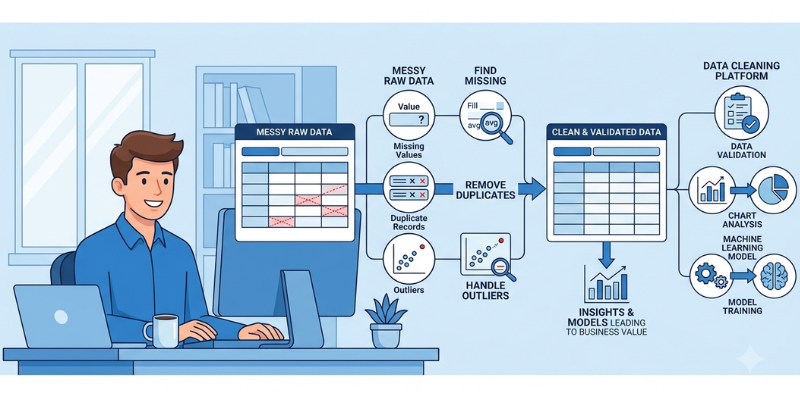
Data cleaning is one of the most important steps in any data science project. Even the most advanced analysis cannot produce useful results if the data is incomplete, inaccurate, or inconsistent. Clean data helps improve decision-making, increases model accuracy, and saves valuable time during analysis. Understanding data cleaning is essential for anyone who wants to build reliable datasets and gain trustworthy insights. If you want to build strong practical skills from the beginning, consider a Data Science Course in Mumbai at FITA Academy and develop confidence through guided learning.
Why Data Cleaning Matters
Raw data often comes from different sources, and it may contain errors, missing values, duplicate records, or incorrect formats. These problems can diminish the quality of your analysis and result in incorrect conclusions. Data cleaning removes these problems so the dataset becomes more accurate and consistent.
Reliable datasets help organizations make better business decisions. They also improve the performance of machine learning models because the algorithms learn from accurate information instead of faulty records. Investing time in cleaning data at the beginning often prevents larger problems later in the project.
Common Data Quality Issues
Before cleaning a dataset, it is important to understand the types of problems that may exist. Missing values are one of the most common issues. Some records may not have complete information because of system errors or incomplete user input.
Duplicate records are another challenge. They can increase the size of the dataset and create inaccurate results during analysis. Inconsistent formatting is also common. For example, dates, names, or numerical values may follow different formats across the same dataset.
Outliers are values that are very different from the rest of the data. While some outliers are valid, others may be caused by entry mistakes or technical errors. Identifying these unusual values helps improve the reliability of the dataset.
Important Steps in Data Cleaning
The first step is understanding the structure of the dataset. Reviewing columns, data types, and value ranges helps identify possible issues early. After that, missing values should be handled carefully. Depending on the situation, they may be replaced, updated, or removed.
The next step is removing duplicate records. This ensures that each observation is counted only once. Standardizing formats is equally important. Keeping dates, text, and numbers in a consistent format makes the dataset easier to analyze.
Outliers should also be examined instead of being removed automatically. Understanding why they exist helps determine whether they provide useful information or represent errors. If you are ready to strengthen your practical knowledge with structured guidance, you can take a Data Science Course in Kolkata and improve your data preparation skills through hands-on practice.
Best Practices for Building Reliable Datasets
Creating reliable datasets requires careful planning and regular validation. Always review the quality of incoming data before starting any analysis. Maintaining consistent naming conventions and formatting standards reduces confusion and improves collaboration across teams.
Documentation is another valuable practice. Keeping a record of every cleaning step helps others understand how the dataset was prepared. This also supports transparency and makes future updates easier.
Automation can simplify repetitive cleaning tasks, but manual review is still important for identifying unusual patterns that automated tools may miss. Combining both approaches often produces the best results.
Common Mistakes to Avoid
Many beginners rush into analysis without checking data quality. This may result in inaccurate insights and untrustworthy predictions. Another common mistake is deleting missing values without understanding their impact. In some cases, missing information may reveal important patterns.
Ignoring duplicate records and inconsistent formats can also reduce the accuracy of reports and models. Data cleaning should never be viewed as a one-time activity. As new data is added, regular quality checks help maintain reliable datasets over time.
Building reliable datasets through data cleaning is a fundamental skill in data science. Clean data improves accuracy, supports better decision-making, and creates a strong foundation for successful analysis and machine learning projects. By understanding common data quality issues and following proven cleaning practices, beginners can develop confidence in handling real-world datasets. If you want to advance your expertise with structured training and practical experience, consider taking a Data Science Course in Delhi to continue building valuable industry-ready skills.

 English
 Arabic
 French
 Spanish
 Portuguese
 Deutsch
 Turkish
 Dutch
Dutch
 Italiano
 Russian
 Romaian
 Greek
Greek
