


Understanding Primary Keys and Foreign Keys
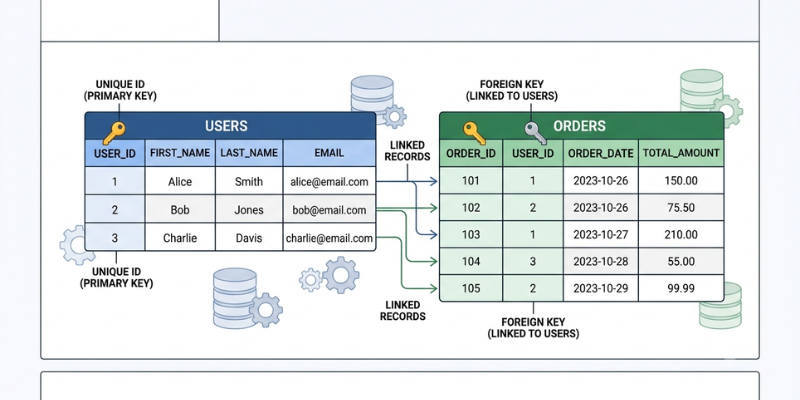
Databases store large amounts of information, so keeping data organized is very important. Two of the most important concepts that help organize data are primary keys and foreign keys. These keys create relationships between tables and make it easier to manage information without unnecessary duplication. Understanding how they work is an essential step for anyone learning database design and full stack development. If you want structured hands-on learning with real projects, you can explore the Full Stack Developer Course in Mumbai at FITA Academy to strengthen your practical database skills.
What is a Primary Key
A primary key refers to a single column or a set of columns that distinctly identifies each row within a table. Each record is required to possess a unique primary key value, and duplicate entries are not permitted. A primary key also cannot contain empty values because every record must be identifiable.
For example, imagine a student table in a school database. Each student has a primary key. Primary keys improve the accuracy and reliability of a database. They prevent duplicate records and ensure that every piece of information can be identified correctly. This makes searching for a unique student ID easier. Even if two students have the same name, their student IDs will always be different. This unique ID acts as the primary key and helps the database quickly locate a specific record.
Why Primary Keys Are Important
Primary keys improve the accuracy and reliability of a database. They prevent duplicate records and ensure that every piece of information can be identified correctly. This makes searching, updating, and deleting records much more efficient.
Primary keys also make it easier to connect related tables. Since each record has a unique identifier, other tables can safely refer to it without confusion. This creates a well-structured database that is easier to maintain as the application grows.
What is a Foreign Key
A foreign key is a field in one table that points to the primary key in another table. This establishes a link between the two tables and aids in maintaining data consistency throughout the database.
For example, consider a customer table and an orders table. The customer table contains a customer ID as its primary key. The orders table stores the same customer ID as a foreign key to show which customer placed each order. This relationship allows the database to connect customer details with their orders without storing the same information multiple times. If you want to build confidence in designing related database tables, consider joining a Full Stack Developer Course in Kolkata to practice these concepts through real-world exercises.
How Primary Keys and Foreign Keys Work Together
Primary keys and foreign keys work as a team to build relationships between tables. The primary key identifies a unique record, while the foreign key points to that record from another table. This relationship reduces duplicate data and keeps information organized.
For instance, instead of storing customer names in every order record, the database only stores the customer ID. When needed, the database matches the foreign key with the corresponding primary key to retrieve the complete customer information. This approach saves storage space and improves data consistency.
Benefits of Using Keys in Database Design
Using primary keys and foreign keys provides many advantages. They improve data accuracy by preventing duplicate records and maintaining valid relationships. They also simplify database management because related information is connected in a logical way.
Another major benefit is better performance. Well-designed relationships help databases retrieve information more efficiently. As applications become larger, these relationships make it easier to update data, generate reports, and maintain the overall structure without creating unnecessary complexity.
Common Mistakes to Avoid
Beginners often make mistakes such as using duplicate values for primary keys or creating foreign keys that reference records that do not exist. These issues can lead to incorrect data and broken relationships between tables.
Another common mistake is choosing a primary key that may change over time. A good primary key should remain stable throughout the life of the record. Planning your database structure carefully from the beginning helps avoid these problems and creates a reliable foundation for future development.
Primary keys and foreign keys are the building blocks of relational databases. A primary key uniquely identifies every record, while a foreign key connects related tables to maintain consistency and reduce duplication. Learning these concepts makes it much easier to design efficient databases that support modern web applications. If you are ready to strengthen your database knowledge and build complete web applications, you can take the Full Stack Developer Course in Delhi to continue your learning journey with practical experience.
Also check: How is Full Stack Different from Frontend or Backend?

 English
 Arabic
 French
 Spanish
 Portuguese
 Deutsch
 Turkish
 Dutch
Dutch
 Italiano
 Romaian
 Portuguese (Brazil)
 Greek
Greek
