


What Is Hashing in Cybersecurity? How It Works and Why It Matters
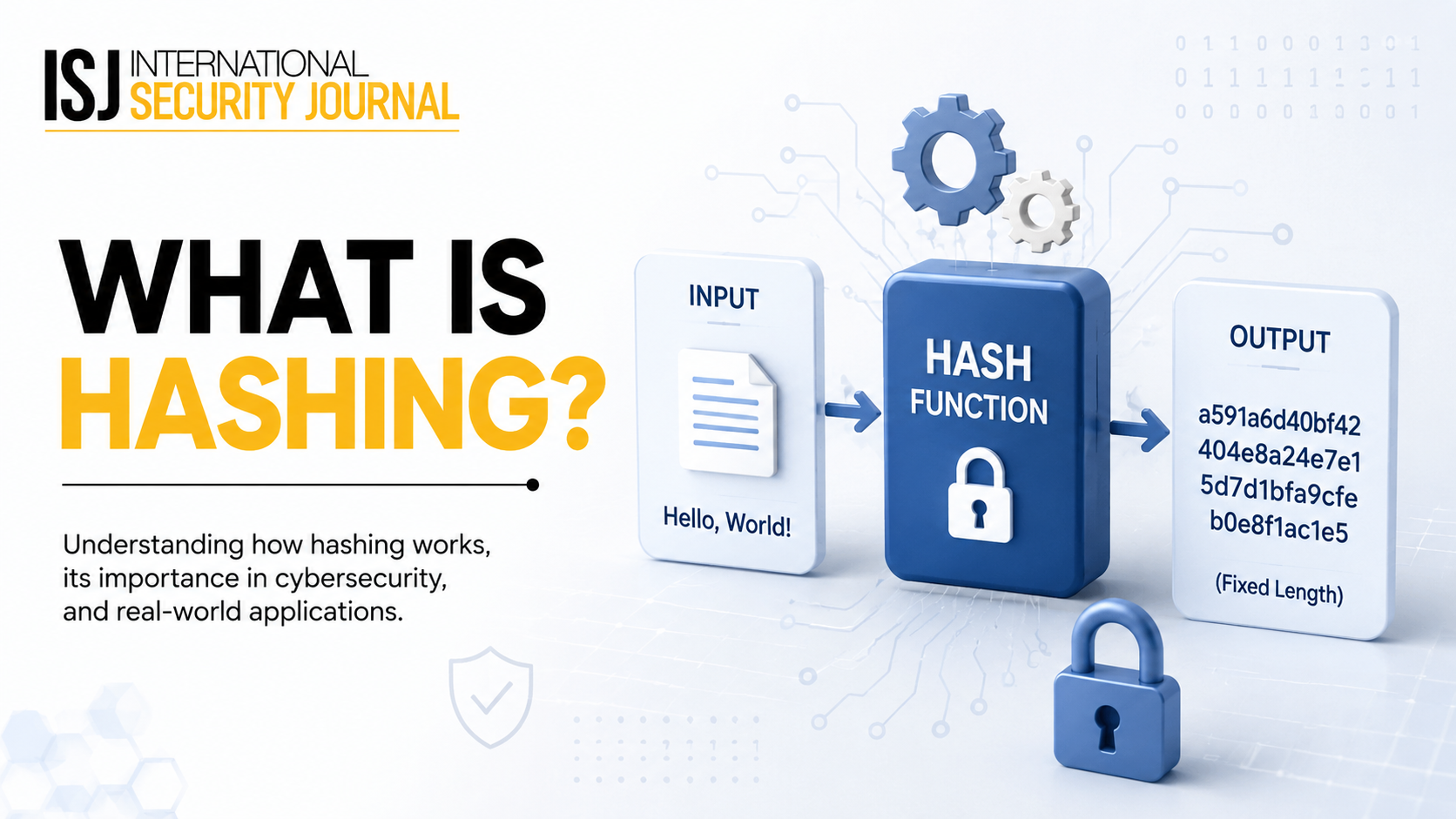
Cybersecurity depends on mechanisms that can protect information without creating unnecessary complexity. Hashing is one of those fundamental mechanisms. It helps verify data integrity, protect stored passwords, support digital signatures, and authenticate information across many systems.
Unlike encryption, hashing is not designed to allow authorized users to recover the original data. Instead, it converts input data into a fixed-length value known as a hash or hash value. When implemented with a suitable algorithm, even a small change in the original data produces a significantly different result.
Understanding what is hashing, how hashing works, where it is used, and its limitations is important for organizations building secure applications and protecting sensitive information.
What Is Hashing in Cybersecurity?
Hashing is a cryptographic process that converts data of any size into a fixed-length string of characters using a hash function. The original input could be a password, document, file, or message.
For example, a hash function can process a long document and generate a hash value of a predetermined length. If the document is modified, the resulting hash should change.
A secure cryptographic hash function generally has these characteristics:
-
It produces a consistent output for the same input.
-
It is computationally difficult to reverse.
-
Small changes in input produce substantially different outputs.
-
Finding two different inputs with the same hash should be difficult.
-
Hash generation should be efficient.
Hashing is therefore primarily used for verification and integrity, rather than reversible data protection.
How Does Hashing Work?
The hashing process begins with an input, which can be virtually any digital data.
1. Input Data
The system receives the information that needs to be hashed. This could be a password, file, message, or transaction.
2. Hash Algorithm
A hash function processes the input according to a defined mathematical procedure.
3. Hash Value Generation
The algorithm produces a fixed-length output called a hash value or digest.
4. Verification
When the same data needs to be verified later, the system can calculate its hash again and compare the result with the stored hash.
If the values match, the data is likely unchanged. If they differ, the data has been modified or the inputs are different.
One important property is the avalanche effect. A tiny change in the input should result in a substantially different hash, making unauthorized modifications easier to detect.
Key Properties of a Secure Hash Function
Not every hashing algorithm is suitable for cybersecurity. Modern cryptographic hashing relies on several important properties.
Deterministic Output
The same input should always produce the same hash when processed by the same algorithm.
One-Way Operation
A secure cryptographic hash is designed to make it computationally impractical to determine the original input from the hash.
Collision Resistance
A collision occurs when two different inputs produce the same hash. Strong algorithms are designed to make finding such collisions extremely difficult.
Avalanche Effect
A small change to the input should create a substantially different output. This helps prevent attackers from easily identifying relationships between similar inputs.
Efficient Computation
Hash functions need to process data efficiently, particularly when used for large-scale integrity checks.
Common Hashing Algorithms
Several hashing algorithms have been widely used over the years, but their security levels differ.
MD5
MD5 produces a 128-bit hash and was historically common for checksums and integrity verification. However, practical collision attacks have demonstrated that MD5 is unsuitable for security-sensitive applications.
SHA-1
SHA-1 generates a 160-bit hash. It has also been considered cryptographically broken because practical collision attacks have been demonstrated.
SHA-2
SHA-2 is a family of algorithms that includes SHA-256 and SHA-512. These algorithms remain widely used for cryptographic applications when implemented appropriately.
SHA-3
SHA-3 is a newer cryptographic hash family based on a different construction from SHA-2. It provides another standardized option for applications requiring secure hashing.
The important point is that older algorithms such as MD5 and SHA-1 should not be selected for new security-sensitive implementations.
Hashing vs. Encryption vs. Encoding
Hashing, encryption, and encoding are often confused, but they serve different purposes.
|
Method |
Purpose |
Reversible? |
|
Hashing |
Integrity and verification |
No |
|
Encryption |
Protecting confidentiality |
Yes, with the correct key |
|
Encoding |
Representing data in another format |
Yes |
Encryption is designed so authorized users can recover the original information using a key. Hashing is generally intended to create a one-way representation. Encoding, meanwhile, is not a security mechanism and is primarily used to ensure data can be represented or transmitted in a compatible format.
Common Applications of Hashing in Cybersecurity
Hashing has applications across many security systems.
Password Storage
Organizations should never store user passwords as plain text. Instead, passwords should be processed using password hashing mechanisms specifically designed to resist guessing attacks.
File Integrity Verification
A hash can be calculated for a file and compared with a previously known value. If the hashes differ, the file may have been changed.
Digital Signatures
Hashing is commonly used as part of digital signature processes. Instead of signing an entire large document directly, systems can hash the document and use the resulting digest as part of the signature process.
Malware Identification
Security tools can use hashes to identify known malicious files. A known malware sample can have a distinctive hash that security systems compare against threat intelligence databases.
Data Integrity
Hash values can help systems detect whether information has changed during storage or transmission.
Blockchain
Blockchain systems commonly use cryptographic hashing to link blocks and support data integrity. Changes to information within a block can affect its hash and disrupt the expected chain of relationships.
Password Hashing and Salting
Password protection requires more than simply applying a fast general-purpose hash function.
Attackers can use powerful hardware to perform large numbers of password guesses. If identical passwords always produce identical hashes, attackers can also identify users who share passwords.
This is where salting becomes important.
A salt is a unique random value added to a password before the password is processed. Each password should receive its own salt. The salt makes precomputed attacks such as rainbow-table attacks significantly less useful.
For password storage, organizations should use dedicated password-hashing algorithms such as Argon2, bcrypt, or scrypt, rather than relying on fast general-purpose algorithms such as SHA-256 alone.
Security Risks and Limitations of Hashing
Hashing is powerful, but it is not a complete security solution.
Brute-Force Attacks
Attackers can repeatedly guess possible inputs and compare their resulting hashes with a stolen hash.
Dictionary Attacks
Common passwords and phrases can be systematically tested against password hashes.
Rainbow Tables
Precomputed collections of password hashes can speed up certain attacks against unsalted passwords.
Hash Collisions
If an algorithm has practical collision weaknesses, attackers may exploit them to create different inputs with the same hash.
Weak Algorithms
Using outdated algorithms such as MD5 or SHA-1 for security-sensitive purposes can undermine an otherwise strong security architecture.
Best Practices for Using Hashing
Organizations should follow several practices when implementing hashing:
-
Use modern cryptographic algorithms for security-sensitive applications.
-
Avoid MD5 and SHA-1 for cryptographic security.
-
Use dedicated password-hashing algorithms for credentials.
-
Generate a unique, random salt for each password.
-
Keep cryptographic libraries and dependencies updated.
-
Protect stored hashes from unauthorized access.
-
Select algorithms based on the specific security requirement.
-
Avoid treating hashing as a replacement for encryption when confidentiality is required.
Why Hashing Matters in Cybersecurity
Hashing provides a foundation for several important security functions. It helps organizations verify whether data has changed, protect stored credentials, identify known files, and support authentication and digital-signature mechanisms.
Its value comes from its ability to create a consistent digital fingerprint while making it computationally difficult to recover the original input. However, secure implementation matters just as much as the underlying concept. An outdated algorithm, weak password strategy, or missing salt can make hashing far less effective.
Conclusion
Hashing is a fundamental cybersecurity technique that supports data integrity, password protection, authentication, and digital security mechanisms. While it does not replace encryption or other security controls, it plays a critical role in modern security architectures.
As cyber threats continue to evolve, organizations need a clear understanding of both cryptographic technologies and their practical limitations. International Security Journal provides security-focused insights and industry coverage to help professionals stay informed about emerging cybersecurity risks, technologies, and best practices.

 English
 Arabic
 French
 Spanish
 Portuguese
 Deutsch
 Turkish
 Dutch
Dutch
 Russian
 Romaian
 Portuguese (Brazil)
 Greek
Greek
