


Your Essential Guide to Transnational Travel in Prague and Bratislava: Exploring Historical Bonds Between Prague & Bratislava
Across the centuries, the Czech and Slovak capitals have been tied together by the sinuous paths of their great rivers by their intertwined pasts, and by the movements of empires across the region. Nowadays, these two destinations present visitors with an exceptional trip across national boundaries Only a four-hour ride on the train or a quick flight separates the two Yet each city has a soul that is wholly its own. Further insights on top rated Slovakian escorts Prague can be found on the online guide.
Taking in both capitals as a pair reveals the intricate pattern of Central European traditions and influences. In these capitals, the soaring points of the Gothic period contrast with the heavy concrete of the communist years. Where beer taverns and wine cellars can be found side by side. Where the past is not simply a thing of the past. This guide is for the visitor who wants to experience the two cities as part of a single living relationship.
Launch your exploration in Prague, a city that has the feeling of a fairy tale in solid form. The mediaeval Old Town Square, with its clock that has been in operation since the early fifteenth century, opens the experience in grand style. Use the Charles Bridge at dawn, when the figures of the saints start to appear from the fog and the castle shines with a golden hue. To engage fully with the culture of Prague, go to the Castle — a site which claims the title of the world's largest ancient castle — and then lose yourself in the small lanes of the Lesser Quarter, where Baroque residences shelter hidden gardens. Prague's musical tradition runs deep; you should attend a performance at the Rudolfinum or at the National Theatre, both venues where Dvorak and Smetana gave the first performances of their great works.
Dining in the Czech capital is an experience that pleases taste and smell and sight. If you want to try the traditional food, svickova (beef with cream sauce) and trdelnik (a sweet pastry), you should go to a historic pub or a restaurant near the river. However, the present-day culinary offerings are equally noteworthy, with Michelin-decorated restaurants such as La Degustation creating modern versions of traditional Bohemian food. Between meals, the city's art is there to be explored, from the Mucha Museum to the modern displays at the DOX Centre. Make sure the local beer is on your list; Prague's bars are for talking, for debating, and for absorbing the slow, steady rhythm of the city's life.
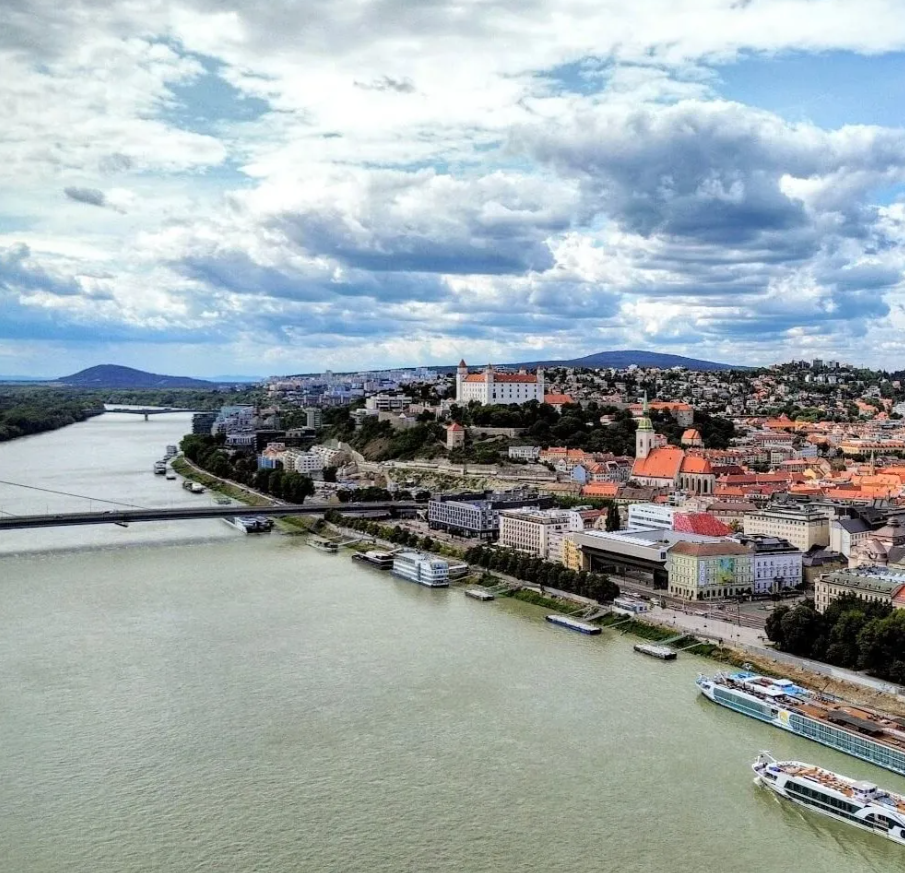
A brief trip to the south takes you to Bratislava, the attractive capital of Slovakia, which is frequently in the shadow of its more well-known neighbour but which is full of its own gentle appeal. Bratislava is different from Prague in that it is smaller and more intimate, and it is easy to cover the city by walking. The historic core is made up of narrow lanes, buildings in soft colours, and small squares that have a cosy feel. The castle on the hill in Bratislava provides a view that includes the river and, on days without cloud, you can see Austria and Hungary. Because Bratislava is a compact city, you can cover a lot on foot — from the Gothic St. Martin's, where Hungarian kings received their crowns, to Cumil, the bronze statue of a man who peeps out from the pavement.

 English
 Arabic
 French
 Spanish
 Portuguese
 Deutsch
 Turkish
 Italiano
 Russian
 Romaian
 Portuguese (Brazil)
 Greek
Greek
